Actividades formativas de doctorado
 
RC013Protein Engineering: Principles, Strategies, and Applications
Organiza: PROGRAMA DE DOCTORADO EN QUÍMICA

Inscripción en: https://gestion-doctorado.uah.es/doccursos
(abierta desde a las 18:00 h. )

Coordinación: Lourdes Gude Rodríguez
Plazas ofertadas: 25
Duración: 2 horas     Tipo: Rama de conocimiento
Modalidad: Presencial

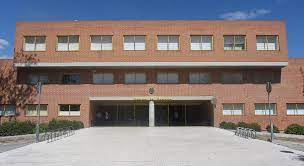
Lugar de impartición: Sala de Grados de la Facultad de Farmacia


Fechas de impartición
9 de julio de 2026 (12:00 a 14:00)


Destinatarios
Estudiantes de las Ramas de Ciencias y Ciencias de la Salud


Descripción general

Engineered proteins have transformed modern society by revolutionizing a wide range of sectors, including the food industry, biotechnology, biomedicine, and industrial biocatalysis. Their ability to perform highly specific functions has enabled the development of improved therapeutics, sustainable manufacturing processes, innovative food products, and environmentally friendly chemical synthesis. However, the ability to design and modify proteins with desired properties has long been one of the major goals of molecular biology and biotechnology.


Objetivos

This seminar will provide an overview of the fundamental principles and methodologies of protein engineering. We will explore both rational protein design, which relies on structural and mechanistic knowledge to introduce targeted modifications, and directed evolution, which mimics natural selection in the laboratory to generate proteins with enhanced or novel functions. The strengths, limitations, and complementary nature of these approaches will be discussed.

The seminar will also present representative case studies and real-world applications, illustrating how engineered proteins are being used to address challenges in healthcare, industrial biotechnology, and sustainable manufacturing. By the end of the session, participants will gain an understanding of the key strategies used in protein engineering and their impact on modern science and technology.


Profesorado

Mateo Sánchez López, University of Cambridge, UK